How people engage with
places, media, and experiences.
A West Virginia data and market research company measuring the emotion behind the data — not just the volume. We score content across a growing set of psychological vectors, so creators see what they publish actually does.
Read a spot before you spend.
A pre-flight neural read on one piece of creative. The platform scores the attention curve, the twelve emotional dimensions, and predicted recall — then returns a clear signal: APPROVED, CONDITIONAL, or REJECTED — along with the time-stamped seconds your team can recut. Click any row to drill into the per-class scorecard.
 SpotDune: Part Two · Warner Bros.APPROVEDCleared for media buyAll twelve classes inside target band. Ship as cut.Premium sci-fi positioning · 60-second global launch spotPeak 0:23–0:34Awe + Curiosity peak — desert reveal landsDip 0:51–0:55Calm dip during transition, within toleranceConvictionHIGH
SpotDune: Part Two · Warner Bros.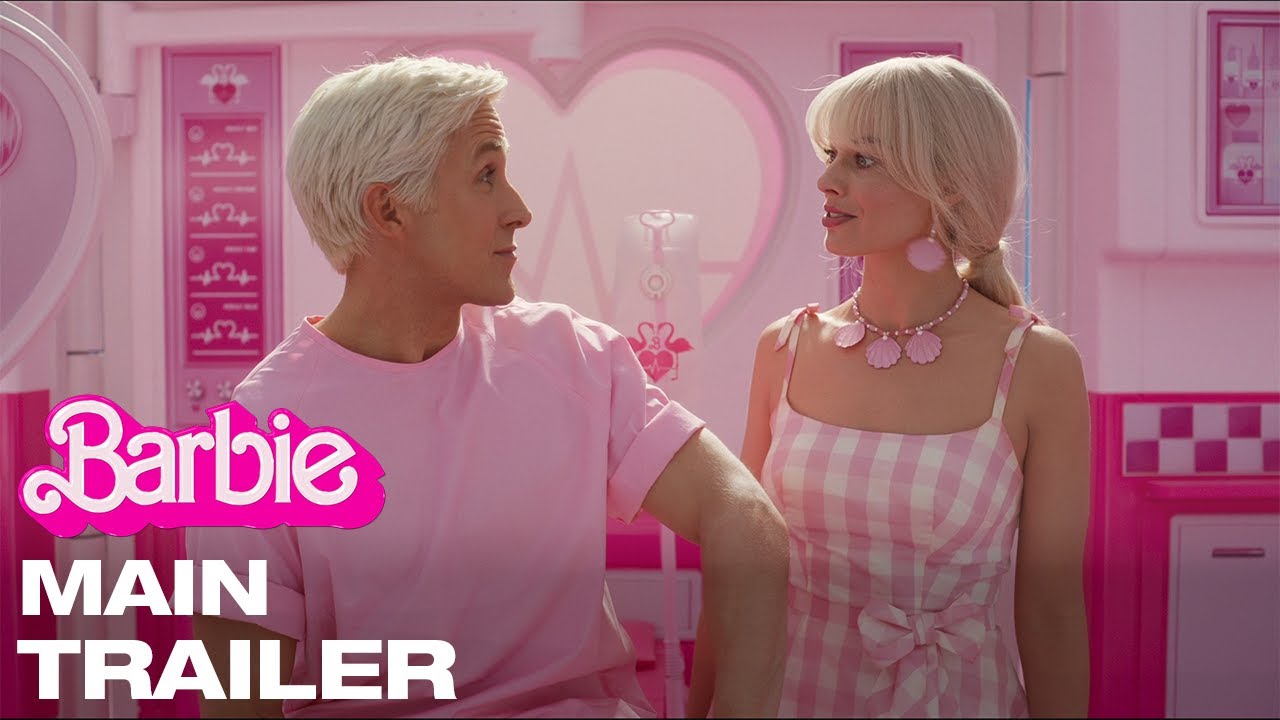 SpotBarbie · Warner Bros.CONDITIONALRecut 0:34–0:52, then re-testSpot is mostly on-spec. Targeted recut at flagged seconds, retest, ship.Youth-segment campaign · brand refresh seeking edgePeak 0:08–0:14Joy + Surprise peak — color reveal worksDip 0:34–0:52Calm and Awe both dip below target bandConvictionMEDIUM
SpotBarbie · Warner Bros.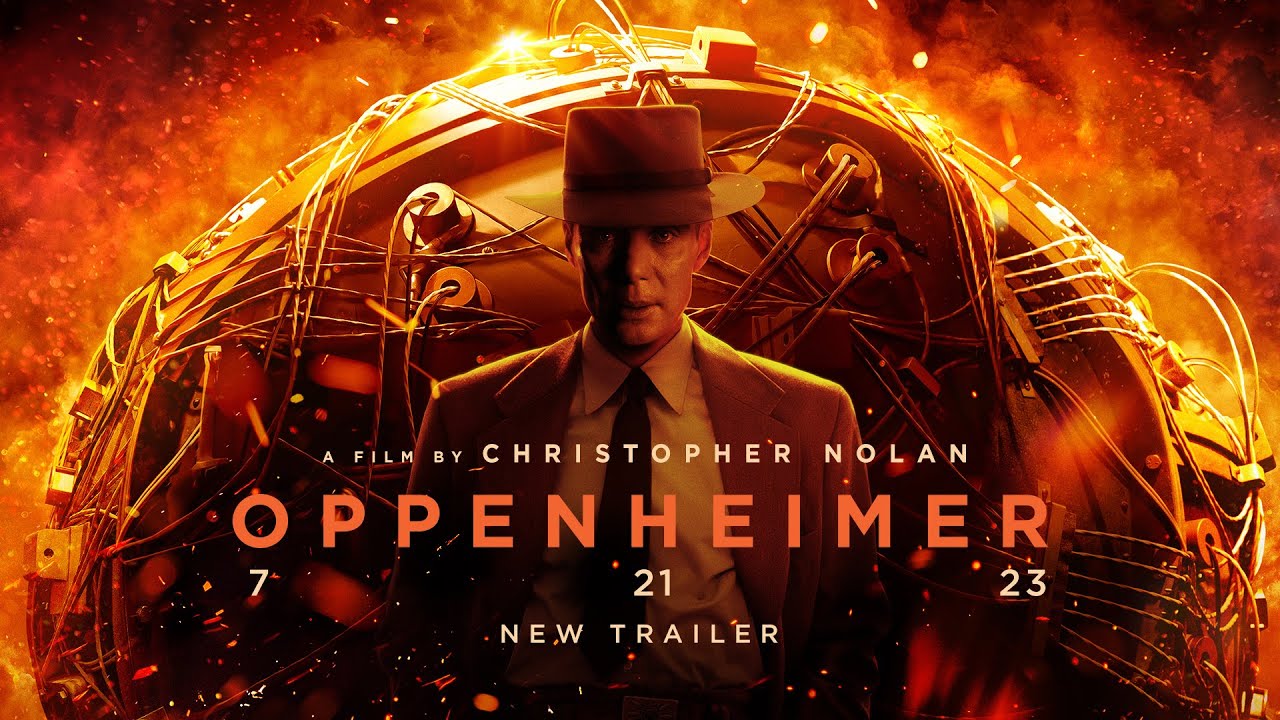 SpotOppenheimer · Universal PicturesREJECTEDDon't run — fundamental tone-brand mismatchMultiple classes outside brand-safe band. Don't run; rebuild from concept.Family-brand expansion · holiday spot (tone mismatch)Peak 1:14–1:22Awe + Anticipation peak (wrong genre signal)Dip ThroughoutFear + Sadness + Anger all above brand-safe bandConvictionHIGH
SpotOppenheimer · Universal PicturesIllustrative · sample reads · not client data · target bands derive from the 60-clip normative corpus
Two cuts. One brain.
Pre-buy A/B testing scored on neural response. The compact readout below distills the same engine that powers the full dashboard on the NeuroLens platform — two cuts of the same 60-second spot, scored across ten emotional dimensions and five network metrics, then collapsed to a verdict. The example below tests an environmental opening cut against a stakes-forward opening cut from the same trailer.
 Cut A — env. openAvatar: The Way of Water · 20th Century Studios · 0:22
 Cut B — stakes openAvatar: The Way of Water · 20th Century Studios · 1:15
The two cuts are moderately different in neural response (diff score 34.5%). The stakes-forward cut drives deeper engagement and faster state transitions; the environmental cut holds attention on peak network activation and inter-subject correlation. Both pass; the choice is which arc your media plan is buying for.
See the full neural readout on NeuroLens.
Network-profile radar · connectivity-difference heatmap · moment comparison timeline · per-clip drilldowns. Requires a NeuroLens login.
Illustrative · sample comparison · derived from NeuroLens ab-testing.html dashboard
Read what people feel. Use it to guide what makes them act.
One layer that combines face, eyes, brain, language, and social signal — turning emotion into something you can act on, not just report on.
How the measurement signal conditions the next generation.
When NeuroLens partners with a generative-media model, scoring stops being a post-hoc judgment and becomes part of the production loop. Variants drafted, variants scored, convergent winners returned to the generator as conditioning — every cycle sharpens the next.
Generate
Variants drafted in parallel — copy, voice, frame, composition. Hundreds at a time, not a handful.
Score
Each variant scored across the 119-dimensional psychological matrix — face, eyes, brain, language, social — before any human looks at it.
Converge
A variant advances only when at least two of nine signals agree on the response curve. Single-signal lift gets flagged, not promoted.
Condition
Convergent winners — and the reasons they won — are returned to the generative model as next-pass conditioning. The loop closes.
Currently piloting with generative-media partners · seeking design partners to test
The Emotional Matrix and the A/B Readout are two surfaces over a nine-signal stack.
Each signal below feeds the 119-dimension methodology. A finding is reported only when at least two of the nine agree. Disagreement gets flagged, not hidden.
Eye Tracking
Gaze · dwell · attention curve
Per-frame gaze coordinates and dwell times. Surfaces where attention actually lands versus where the creative is asking it to.
60 Hz gaze · ~28 ms median fixation latency
Facial Expression Recognition
Micro-expression coding
Frame-rate facial-action-unit detection mapped to seven canonical emotions plus contempt. Catches the half-second tells that survey data misses.
8 FAU classes · per-frame confidence vectors
NLP Sentiment
Linguistic feeling, not keyword counting
Transformer-based polarity, intensity, and contextual sentiment scoring on copy, scripts, captions, and customer voice — including irony detection.
Continuous −1.0 → +1.0 valence + intensity
Social Monitoring
Brand-signal stream
Continuous monitoring of brand-relevant social signal — volume, sentiment, semantic drift, and competitor share — into a single time-series view.
Hourly NPS proxy · 7-day rolling baseline
Sentiment Databases + Cultural Tropes
Semantic ground truth
A semantic library of how cultural references actually land — from regional idiom to in-group signal — used to flag tone-brand mismatches before they ship.
200K+ tagged references · regional weighting
Semantic-to-Behavior Prediction
Language → action models
Predicts purchase intent, share probability, and call-to-action follow-through from language features alone. The closer the language sits to the buyer's, the higher the score.
Predicted intent vs measured intent · r ≈ 0.71
Power-law Attention
Long-tail attention math
Models the fact that attention is distributed power-law, not normal — so means lie. Surfaces the few seconds doing all the work.
Pareto-α per spot · top-decile capture rate
Generative-Media Feedback
Pre-screening generated variants
Scores AI-generated and AI-augmented creative variants against the same nine signals — so the production model can condition on what scored, not on what was guessed.
50 variants screened → 5 defensible in a morning
Sample metrics · illustrative · methodology calibrated against the 60-clip normative corpus
Methodology you can audit.
The platform sells research-grade pre-buy reads. Research-grade means the science is traceable, the calibration is honest, and the failure modes are named. Four anchors:
Peer-reviewed lineage
The methodology is rooted in three disciplines with decades of published work — neuromarketing (Plassmann, Smidts, Ramsoy), affective computing (Picard, Calvo, Barrett), and computational social science (Lazer, Pentland, Salganik). Every claim on this site is traceable to a citation.
Bibliography · /citations
60-clip normative corpus
Every read scores the candidate creative against a 60-clip normative baseline spanning trailers, brand spots, news cuts, and documentary footage. Target bands per emotional class are derived from this corpus, not from intuition.
Continuously curated · re-balanced quarterly
EEG + fMRI validation
Internal validation runs use EEG and fMRI to confirm that the platform's predicted neural response tracks measured neural response across a wide variety of content. Validation runs are ongoing, not one-shot.
Multi-modal ground-truth check
Convergence over single-signal confidence
A finding is reported only when at least two of the nine signals agree on the response curve. Single-signal lift gets flagged, not promoted. Disagreement gets named in the readout — not hidden behind a composite score.
2-of-9 minimum · disagreement is data
Methodology brief available on request before engagement
Six months ago this was a methodology. Today it’s a platform looking for design partners.
Oct 2025
NeuroLens testing begins
First brain-response predictions run against the 60-clip corpus. Convergence rule shipped.
Jan 2026
Huntington Analytics, LLC
West Virginia entity formed. The firm launches as the commercial face of the platform.
Apr 2026
119-dim methodology validated
Internal EEG + fMRI validation runs confirm predicted-vs-measured neural response across a wide variety of content.
May 2026 · now
gBETA Marshall cohort
Selected into the Summer 2026 gBETA Marshall accelerator. Sponsor: Huntington National Bank.
Q3 2026
Design-partner pilots open
Six selected design partners begin paid-by-co-authored-case-study engagements. Selection is rolling.
2027
Generative-media partnerships scale
The feedback loop closes at production scale: scoring → conditioning → next-generation.
Dates after May 2026 are scheduled, not promised · selection is rolling
An operator who has lived inside the data.
Edward Yo spent the early part of his career building forecasting and predictive analytics for large enterprises across telephony operations, credit-score analytics, and hospital throughput. The technical models always worked. The decisions still got made on gut. NeuroLens is what he would have wanted in every one of those rooms.
Huntington Analytics, LLC is a West Virginia firm. Edward is the founder and operator, working as a solo founder, which means the company ships at a pace that did not exist five years ago and he is personally accountable for everything that comes out of it.
The firm is headquartered in Huntington, WV and is in the gBETA Marshall Summer 2026 cohort. NeuroLens started testing in October 2025.
What a design partner actually takes home.
Specifics, not pitch. A six-month, no-fee engagement, focused scope, four deliverables we’re putting our name on.
Readout
Defensible written readout
A written report your team can put in front of a CMO without translation. Verdict, reasons, recut recommendations, methodology appendix. Not a dashboard screenshot.
Scorecard
Per-spot scorecard
All 119 psychological dimensions scored against the 60-clip normative band, with time-stamped peaks and dips. The kind of file an analyst can drill into and a director can skim.
Founder time
4 hours founder time / month
Strategy + roadmap, not just diagnostic. The person who built the stack reviews the read with your team and helps map what to test next.
Reference network
Reference network + case study
Co-authored case study (review and approve before publication), logo rights, and two investor reference calls during the engagement window. We borrow your credibility; you borrow ours.
Six-month engagement · no fee · selecting for fit, not budget
Stay Ahead with Data Insights
Get monthly tips, case studies, and analytics strategies delivered to your inbox. Learn how to turn your data into competitive advantage.
No spam, ever. Unsubscribe anytime.
We’re selecting design partners to pilot the platform.
The 119-dimension methodology is built. The validation work is in front of us. We’re looking for a small cohort of brand and creative teams to put the platform on a real decision and tell us what holds up.
No-fee design-partner engagement. Focused scope, defensible readout your team can put in front of a CMO.
We’re selecting a small cohort of brand and creative teams to pilot the platform. Selection is rolling.
The entire ask up front. One conversation about how creative gets approved inside your organization.
The questions we always get.
If you have a sharper one, the “Apply to the Pilot” CTA gets you a 20-minute conversation in front of the person who built the platform.
What do you need from us to run a single-spot read?
One creative file (final-cut or near-final, mp4/mov), plus a one-paragraph context — brand, audience, what you’re testing for. We handle calibration against the 60-clip normative corpus. Mutual NDA standard before any file moves.
How long does a pilot take?
A single-spot pre-flight read returns a written verdict in 48–72 hours from file receipt. An A/B comparison runs in the same window. The full six-month design-partner engagement scales to roughly one read per month plus founder-time review.
What is the methodology validation behind the 119 dimensions?
Lineage in peer-reviewed neuromarketing (Plassmann, Smidts), affective computing (Picard, Calvo, Barrett), and computational social science (Lazer, Pentland, Salganik). Calibration baseline is a 60-clip normative corpus, re-balanced quarterly. Internal validation runs use EEG + fMRI to confirm predicted-vs-measured neural response. Full bibliography on /citations.
How do you handle pre-release creative under NDA?
Mutual NDA before any data is shared, in either direction. The creative stays on a single-tenant ingest pipeline; no model is trained on your content. Security posture documented in SECURITY.md, available on request before engagement. Subprocessor list disclosed.
What if the verdict says don’t ship?
That’s the work. The readout names the dimensions that are off, the seconds that drive them, and recut recommendations. We’ll re-run a second pre-flight at no additional fee if the recut comes back within the engagement window. A NO-GO verdict is a 1-week head start on a salvage plan, not a dead end.
What does a design-partner engagement cost?
No fee. Six-month engagement, focused scope, defensible deliverable. We’re selecting partners for fit, not budget. We get co-authored case study + logo rights + two investor reference calls; you get the readouts, four hours of founder time per month, and a methodology your team can defend in a CMO review.
Looking for short conversations with creative leaders, brand marketing decision-makers, and agency principals.
Especially in healthcare, public-health, behavior-change creative, or any campaign where the brief is to actually change behavior, not just to be remembered.
For organizations that are a strong fit, we offer a six-month no-fee NeuroLens design-partner engagement, which includes logo rights, a co-authored case study, two investor reference calls, and four hours of founder time per month. Twenty minutes on the phone is the entire ask up front.
Apply to the pilot